Should You File an LLC on Your Own or Use a Professional Service?
You can file an LLC on your own — but it takes time, attention to detail, and some research. Here's what the process involves, where mistakes happen, and when a formation platform makes more sense.
Bizee Editorial Staff
Editorial Team
Introduction
Yes, you can file an LLC on your own. The process is public, the forms are available through your state's Secretary of State office, and the state fee is the same either way. The real question is whether the time, research, and risk of errors are worth the savings over using a formation platform.
Can you file an LLC on your own?
Yes. Forming an LLC yourself is legal in every state. You file the Articles of Organization — sometimes called a Certificate of Formation — directly with your state's Secretary of State office, pay the state filing fee, and wait for approval. No attorney or formation platform is required.
The state fee is the same whether you file on your own or through a platform — it typically ranges from $50 to $500 depending on your state. What changes is how much of the research, paperwork, and follow-up you handle yourself.
Most people who file on their own save money on formation fees. The trade-off is time — researching your state's requirements, filling out the forms correctly, and tracking down any supplementary steps like getting an Employer Identification Number (EIN) or drafting an operating agreement.
What filing an LLC yourself actually involves
Filing an LLC on your own means handling each step without a guided process to catch gaps. The steps are straightforward in theory — but errors in the formation documents can create real problems later, including disputes over ownership or gaps in your liability protection.
Search for and reserve your business name
Your LLC name needs to be distinguishable from other registered businesses in your state. Check your state's business name database before filing — submitting a name that's already taken will get your application rejected and delay the process.
File your Articles of Organization
The Articles of Organization is the official document that creates your LLC. It typically includes your LLC's name, its purpose, the registered agent's name and address, and your management structure. You file this with your state's Secretary of State office and pay the state filing fee.
Requirements vary by state, so check your state's specific form and instructions carefully. A mistake here — a wrong address, a missing field, or an incorrect management designation — can result in rejection or, worse, a formation that doesn't protect you the way you expect.
Appoint a registered agent
Every LLC is required to have a registered agent — a person or business with a physical address in the state who can receive legal documents and official correspondence on behalf of your LLC. You can serve as your own registered agent, but that means your name and address become part of the public record and you need to be available during business hours.
Apply for an EIN
After your LLC is approved, you'll need an Employer Identification Number (EIN) from the IRS to open a business bank account, hire employees, and handle taxes. You can apply for an EIN for free at irs.gov. Not getting one after formation disrupts your tax setup and delays banking.
Draft an operating agreement
An operating agreement is an internal document that defines how your LLC is owned and run — member contributions, management structure, voting rights, and how profits and losses are split. It's not filed with the state, but it's one of the most important documents your LLC will have.
For single-member LLCs, an operating agreement helps establish your business as a separate entity from you personally — which matters if your liability protection is ever challenged. For multi-member LLCs, skipping it or drafting it poorly is one of the most common sources of disputes between members.
When a formation platform makes more sense
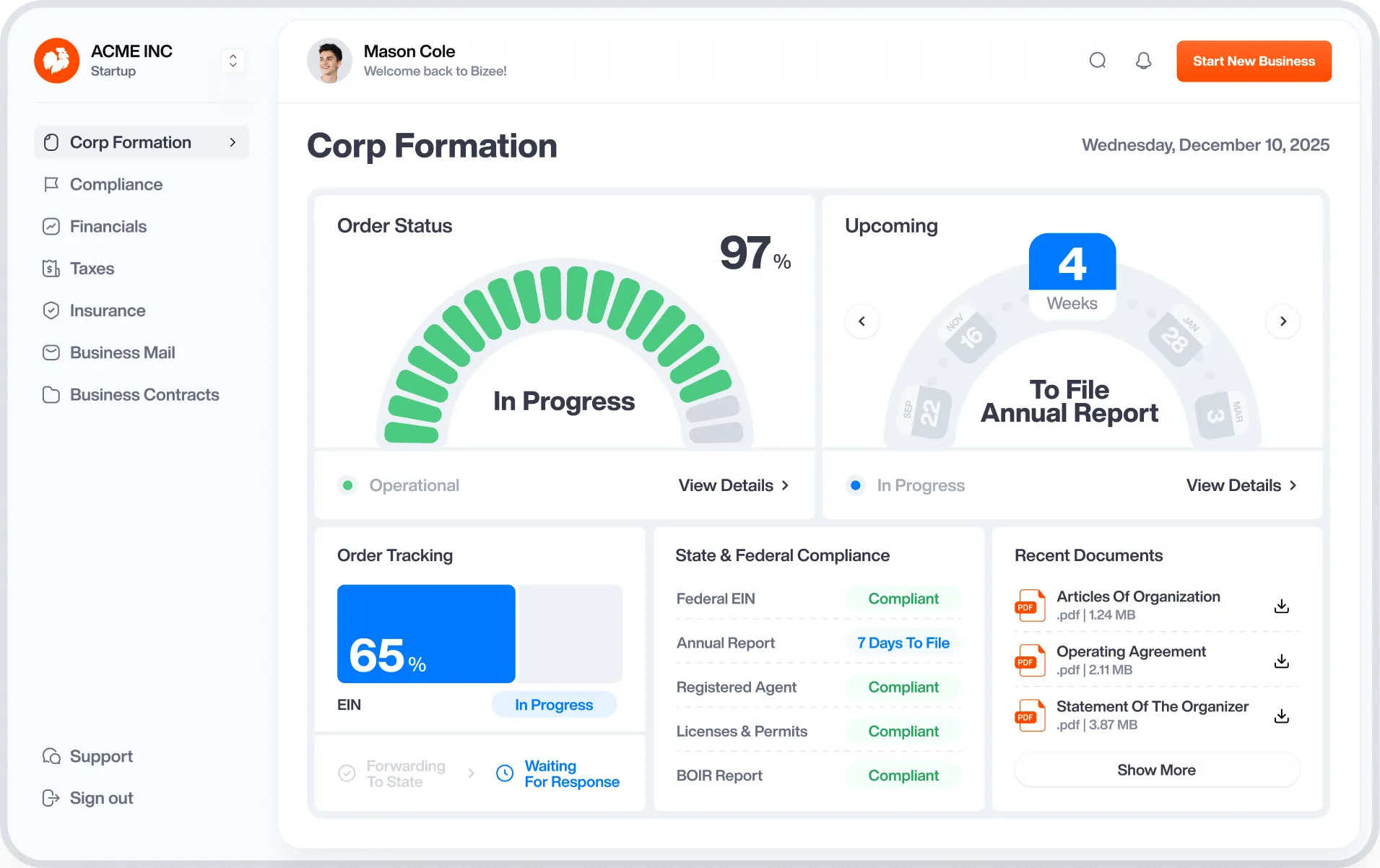
A formation platform doesn't replace the state filing process — it guides you through it, checks for errors, and handles the submission on your behalf. For many business owners, the time savings and reduced risk of rejection are worth more than the service fee.
Filing on your own makes sense if you have a simple, single-member LLC, you've done the research on your state's requirements, and you're comfortable tracking the steps yourself. The savings are real — you pay only the state fee.
A formation platform tends to be the better call when you have multiple members with different ownership stakes, you're operating in a regulated industry, you want a registered agent service included, or you'd rather spend your time on the business itself. Getting the formation documents wrong can mean your LLC doesn't protect you the way you expect — and fixing it after the fact takes more time and money than getting it right the first time.
If your business involves complex ownership, intellectual property, or operations across multiple states, talk to a legal professional before filing. The formation document is the foundation your LLC is built on.
FAQ
Yes. You can form an LLC on your own in every state. You file the Articles of Organization with your state's Secretary of State office, pay the state filing fee, and appoint a registered agent. No attorney or formation platform is required. The process is public and the forms are available through your state's official website.
It depends on your state. State filing fees for the Articles of Organization typically range from $50 to $500. That fee is the same whether you file on your own or through a formation platform. Filing on your own means you pay only the state fee — no service fee on top of it.
It depends on the mistake. Minor errors — like a typo in an address — can often be corrected with an amendment filed with the state. More significant errors in your formation documents or operating agreement can create disputes over ownership or leave gaps in your liability protection, meaning your personal finances could be on the hook for business debts.
It depends on your state and your LLC structure. Some states require operating agreements for multi-member LLCs; others don't require them at all. But even when it's not required, having one is worth it. For single-member LLCs, it helps establish your business as a separate entity. For multi-member LLCs, it defines ownership, profit splits, and decision-making — and prevents disputes later.
It depends on your situation. Filing on your own saves money on service fees and works well for a simple single-member LLC if you're comfortable researching your state's requirements. A formation platform makes more sense when you have multiple members, want a registered agent included, or want a guided process that reduces the risk of errors or rejection.
Talk to a legal professional if your LLC has multiple members with different ownership stakes or contributions, if you're operating in a regulated industry like healthcare or finance, if you need to register in multiple states, or if intellectual property protection is central to your business. These situations add complexity that goes beyond what a standard formation process covers.
Yes. The Articles of Organization — the primary formation document for an LLC — is a form you fill out and file directly with your state's Secretary of State office. You can download it from your state's official website, complete it, and submit it along with the state filing fee. No intermediary is required.